Bringing Spiritual Practice into Medical Education
A Youth led effort.
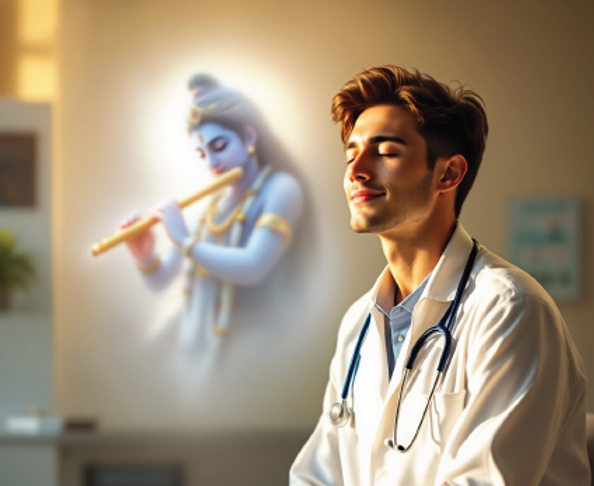
In today’s fast-paced world, medical students face immense academic pressure, leading to stress, anxiety, and burnout. The Innovative Youth Preaching Project, initiated by HG Srinivas Priya Das, aims to integrate spirituality into medical education to help students achieve mental well-being and holistic growth along with academic excellence. Through structured programs, mentorship, and
research-based spiritual practices, the initiative fosters leadership, mindfulness, and self-discipline among medical students.
Understanding the Audience: Medical Students Seeking Holistic Growth
This project targets medical students (both male and female) aged 16 to 30 at MIMSR Medical College, Latur, Maharashtra. Total number of participants are close to 50.
This initiative helps medical students manage stress, improve focus, and maintain balance by providing spiritual tools. It offers a platform for discussions, community service, and leadership development, promoting personal well-being and a compassionate, holistic approach to patient care.
Project methodology: Spiritual Engagement and Leadership Development
The initiative operates on two fronts:
- Outreach to New Students: Introducing spiritual principles through interactive sessions, workshops, and chanting practices.
- Nurturing Existing Participants: Providing continuous mentorship, deeper engagement in spiritual discussions, and leadership opportunities.
By maintaining this dual approach, students transition from participants to mentors, strengthening the overall impact of the project. A detailed project structure has been reported below.
Detailed project Structure and Key Activities
The program is structured across multiple engagement levels, integrating spiritual well-being into healthcare education through diverse activities.
Regular Engagements:
- Weekly Sessions: DYS (Divine Youth Spirituality) and GAME (Group Activities for Mental Engagement) offer interactive spiritual exploration.
- Monthly Guest Speaker Series: Experts from Bhaktivedanta Hospital & Research Institute (BVHRI) discuss spirituality in healthcare.
Workshops, Research & Symposiums:
- Quarterly Workshops: Focus on stress
- Research & Seminars: Collect stress and anxiety data, with BVHR professionals exploring evidence-based integration of spirituality in medical education.
- Annual Symposium & Outreach Programs: Large-scale events highlighting spiritual well-being’s role in healthcare, with expert-led sessions.
Institutional & Practical Learning:
- Govardhan Eco Village (GEV) Retreats: Hands-on learning in sustainability and Vedic living.
- Meetings with College Authorities: management, leadership, and spirituality in Collaborating with academic institutions for support .
Govardhan Eco Village (GEV) Retreats: Hands-on learning in sustainability and
Vedic living.
Meetings with College Authorities: management, leadership, and spirituality in Collaborating with academic institutions for support .
Scientific justification: Data-Backed Outcomes
The program encourages more medical students to take part in spiritual and wellness activities, helping them improve focus, mental well-being, and academic performance through spiritual practices. It also builds strong connections between spiritual groups and medical institutions, creating a supportive environment for learning. In the long run, this helps future doctors develop a more caring and balanced approach to patient care.
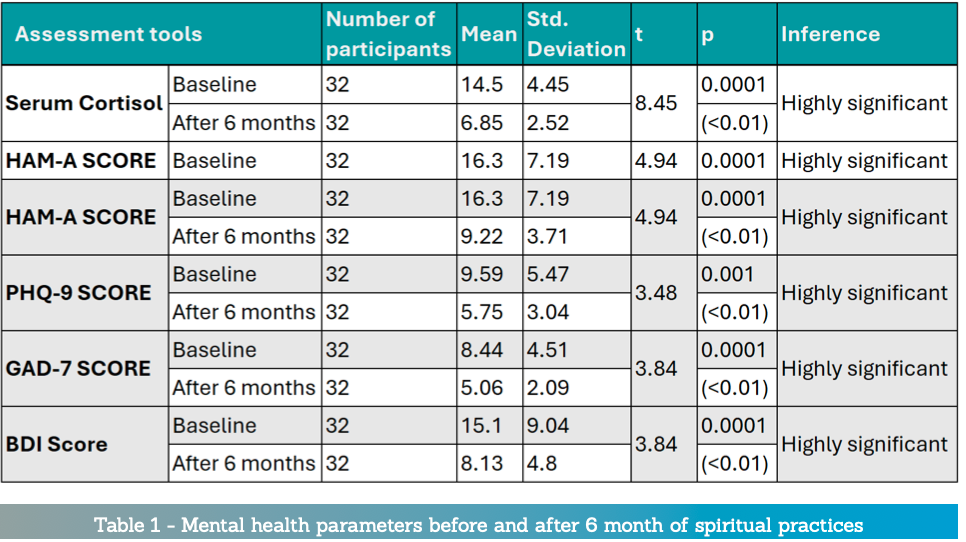
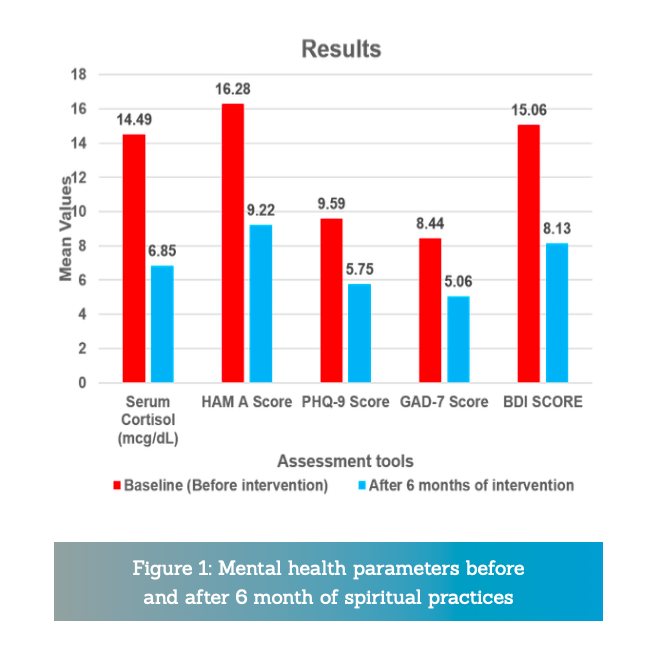
Data of 32 participants before this project and after the project has been presented above in Table 1 and Figure 1. The measured values are Serum cortisol, HAMA-score, PHQ-9 score, GAD-7 score and BDI-score. The data shows significant reduction of the mean value and standard deviation indicating the positive impact of spiritual practices on mental health problems.
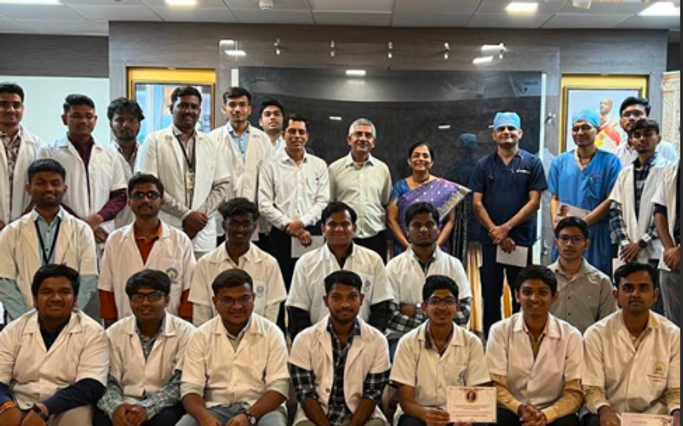
Participants of the experiment
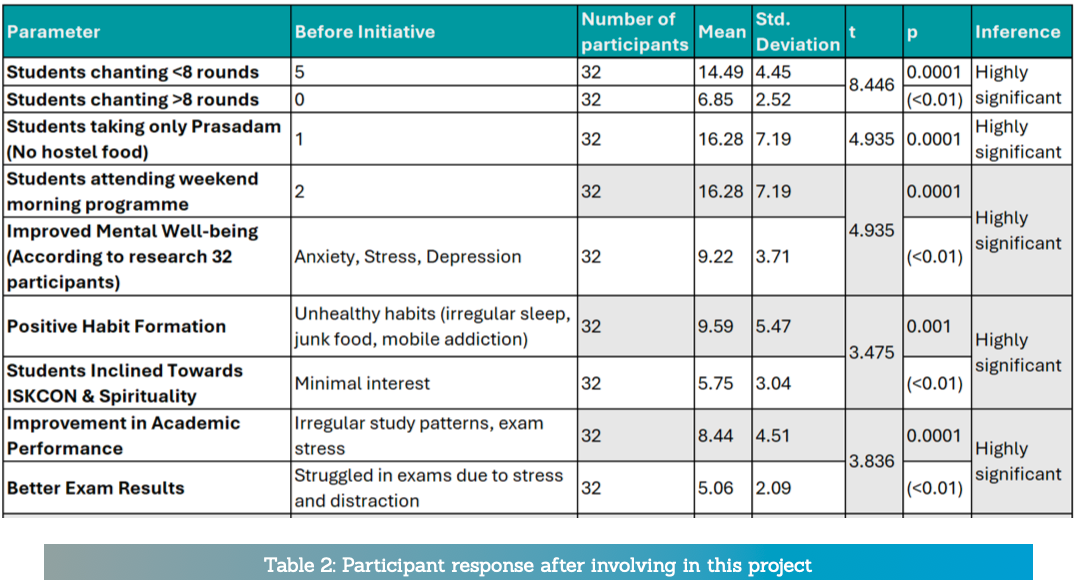
Students report improved focus, emotional stability, and academic performance due to structured spiritual practice. More students now engage in chanting, weekend programs, and Prasadam over hostel food. Mental well-being has improved, with anxiety, stress, and depression reducing by 43.36%, 52.8%, and 46% respectively. Additionally, 40% have adopted better discipline and lifestyle changes. Interest in ISKCON is rising, with 10% of each batch actively participating. Academically, students show better focus, structured study patterns, and improved exam performance.
More details are in Table 2.
However, to reach a wider mass in an effective manner, there are concerns of resources and overcoming challenges. Details to that has been
presented below.
Resources and Challenges
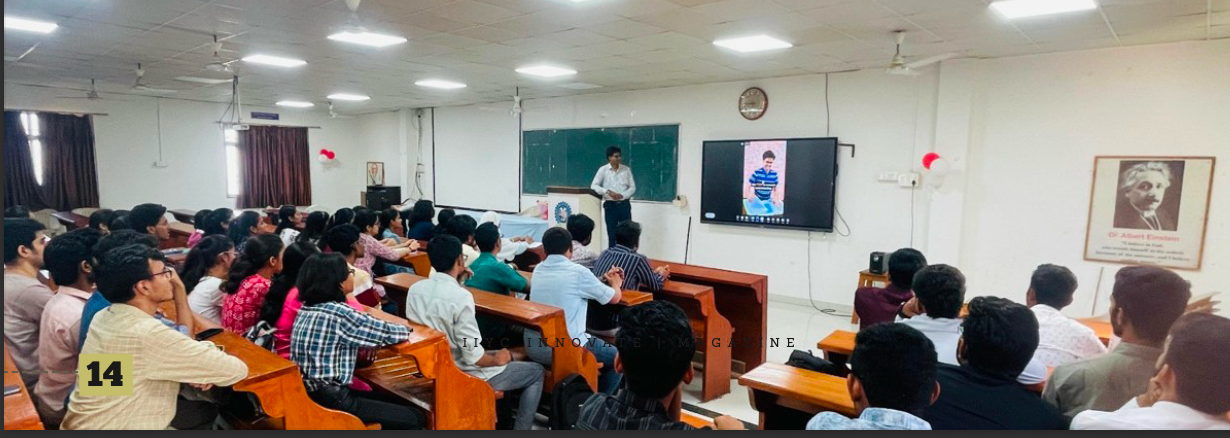
The program received financial support from the temple and through sponsorships. Students are acted as volunteers. Medical instruments and audiovisual aids are used from the medical college. The college lecture hall has served as the venue In addition to that following support has been received from Bhaktivedanta hospital.
Major Collaborations with Bhaktivedata Hospital
Medical Research & Mental Health Initiatives:
- Research on the Effect of Mantra Meditation on Mental stress.
- Pretest-Posttest Model with Cortisol & Psychological Assessment
- Participation in Erudite Conference that won First Prize
- Proposal for credit-based integration
- Outcome: Won First Prize at Erudite Conference | Proposal for credit-based integration
Outcome: Won First Prize at Erudite Conference |
Proposal for credit-based integration
Counseling & Wellness Programs:
- Spiritual Counseling for Medical Students
- Gita-Based Mental Resilience Training
- One-on-One Mentorship by Senior Devotee Doctors
- Outcome: Reduction in stress levels | 15+ students chanting 4+ rounds daily 25+ students chanting 1+ round daily
Integration of Devotional Practices in Medical Life:
- Japa Marathon for Stress Management
- Regular Prasadam Distribution for Nutritional & Mental Well-being
- Outcome: Increased participation in ethical decision-making & compassionate care
Academic & Skill Development Programs:
- Medical Research, Ethics & Spirituality Seminars and workshops by Bhaktivedanta Experts
- Workshops on Holistic approach in Patient Care
- Outcome: Students experienced improved focus & reduced burnout
Outcome: Students experienced improved focus
& reduced burnout
Challenges and Future Directions
Despite its success, the program faces challenges. Balancing academics and spiritual practice remains a struggle for many students. While some develop strong habits, others find it difficult to stay consistent. Funding for large-scale expansion remains a major hurdle, and securing sponsorships will be key to bringing the initiative to more colleges. Additionally, resource and manpower limitations pose obstacles, especially for research-based initiatives. However, support and appreciation from students and medical authorities, including the Vice Chancellor of MUHS, has been strong. With growing interest, there is potential for integration into the official curriculum, making spirituality a recognized part of medical education.
Conclusion: A Blueprint for Integrating Spirituality into Healthcare
The initiative has received positive feedback from MUHS Vice Chancellor and medical college authorities, along with active student participation. The next steps include expanding to more colleges and working towards integrating the program into the official curriculum through ongoing engagement with academic leaders.