Integrating Spiritual Wisdom into Modern Education: A Transformative Initiative for MBA & B.Tech Students
The implementation of the National Education Policy (NEP) 2020 has opened new avenues for integrating spiritual education within mainstream academics. Recognizing the importance of cultivating both professional competence and inner values, NEP emphasizes a holistic approach to learning, ensuring students not only excel in their careers but also develop a higher sense of purpose,
ethics, and leadership.
Seizing this opportunity, HG Manikishore Prabhu, who oversees a preaching center in Berhampur, Orissa, has introduced by teaching Vedic education within the MBA and B.Tech curriculum. With a structured approach, he has been able to weave essential Vedic management principles into the academic framework, bringing timeless wisdom to the modern education system.
This initiative took shape in November 2024, when a faculty member who had an impact during his temple visit, became inclined towards Krishna consciousness. His growing interest led to a collaboration that opened doors for Manikishore Prabhu to serve as a visiting faculty at two institutions,Presidency College for MBA
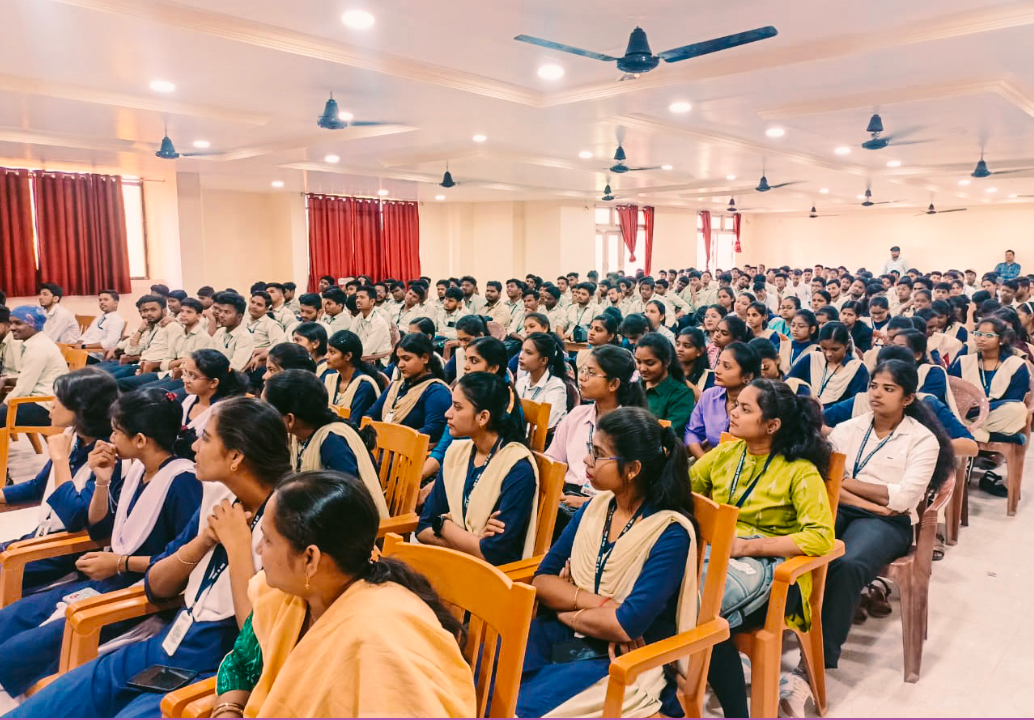
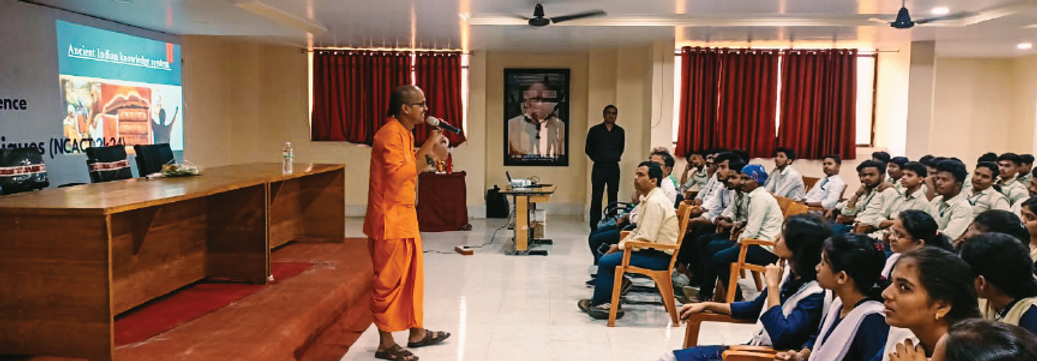
and Vignan College for B.Tech & MBA. Under this arrangement, he delivers weekly two-hour sessions, focusing on leadership, governance, ethics, and spiritual management principles rooted in the Bhagavad Gita, Mahabharata, and other Vedic texts. Currently, 100 students, 50 from Residency College and 50 from Vignan College are actively engaged in the program. While the impact is visible, with students showing increased curiosity and participation, challenges remain, particularly sustaining student engagement and defining structured post-course follow-ups. At present, only 10-15% of students are showing deeper involvement, a number that requires strategic efforts to increase.
A Curriculum Rooted in Values and Leadership
The program follows a structured syllabus aligned with NEP 2020’s recommendations, focusing on management principles from Indian scriptures. Weekly two-hour sessions are conducted, with the institutions paying HG Manikishore Prabhu as a faculty member, just like a visiting professor. Being an M.Tech graduate himself, his presence adds academic credibility, making it easier for students to relate to the teachings.
Subjects covered in the curriculum include:
- Evolution of Indian Management Thought Understanding the need for an India-centric approach to leadership.
- Management Perspectives in Vedantic Literature Exploring self-discipline, decision-making, and leadership insights from Vedanta.
- Management Lessons from the Ramayana Ethical governance, leadership strategies, and alliances.
- Management Insights from the Mahabharata & Bhagavad Gita – Conflict resolution, inspirational leadership, and work-life balance.
- Kautilya’s Management Lessons Principles of administration, governance, and ethics.
- Jain and Buddhist Perspectives on Management – Conflict resolution and moral leadership.
- Universal Human Values for B.Tech Students – Self-exploration, professional ethics, and natural harmony.
Beyond the Classroom: A Journey of Transformation
Under the guidance of HG Manikishore Prabhu, the professor who initiated this
collaboration continues to deepen his spiritual journey. He regularly attends congregational classes and actively provides support in the campus.

Impact & Challenges
Though the program is still in its early stages, the response has been encouraging. Out of 100 enrolled students, around 10-15 have shown deeper interest, engaging with the teachings even after completing the course. However, challenges remain. Student turnout is low, and there is still uncertainty about how to engage them after the course ends. Since the initiative only began in November 2024, strategies are still being developed to increase participation and create structured follow- ups for students who wish to continue their spiritual journey.
A Model for the Future
Despite these hurdles, this initiative stands as a strong example of how spiritual wisdom can be integrated into mainstream education. By blending scriptural teachings with modern academics, the program is shaping future professionals who not only excel in their fields but also lead with integrity, wisdom, and a service-oriented mindset.
With continued refinement and support, this initiative has the potential to expand to more institutions, ensuring that future generations of students graduate with both professional excellence and a deeper understanding of life’s higher purpose.